

Voices of the Past
Historical Romance Author

Jamestown: New Hope or Death Trap?
Friday, June 24, 2022 by Sherry Shindelar
Categories: 17th Century
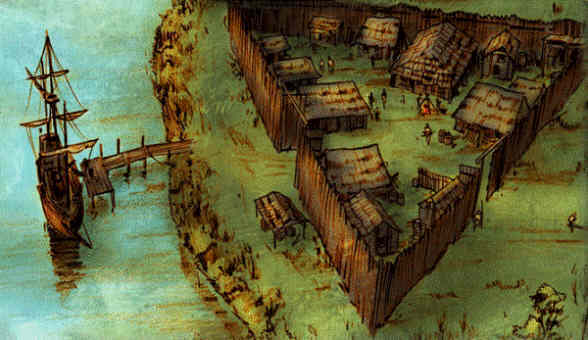
When the Susan Constant, Godspeed, and Discovery crept up the Chesapeake and landed along the James River in 1607, the 105 passengers and 39 crew members were all male: Soldiers and men out to make a name or fortune for themselves. They had not traversed the Atlantic and spent four and a half months in travel in order to do anything mundane like farming. Many were from the upper class, second and third sons of the wealthy. Blacksmiths, carpenters, and other skilled laborers were present, as well. Every member of the expedition was an employee of the Virginia Company who expected them to make a profit for the company. They hoped to discover gold and silver or a route to the East Indies. What they found, instead, were trees, furs, and approximately 14,000 Powhatan and Algonkian-speaking Indians.
Life was rough. They didn’t know how to grow food in this new world, and this combined with a brackish water supply, diseases they’d never been exposed to, and occasional hostilities between them and the Powhatans led to a death rate of over 50%. Forget riches, finding enough food and good water for survival became the main goal. By the end of the first winter, only 38 of the 105 colonists were still alive. The winter of 1609, known as the “Starving Time,” was worse. Archeological evidence suggests that some resorted to cannibalism. The colony would likely have not survived at all without the help of Pocahontas.
But this did not stop more English from making the miserable journey across the North Atlantic, trapped in the holds of ships with spoiled food, rats, and other pestilences. Why? Why did the later colonists keep coming even after they’d heard the horror stories and knew the risks?
These adventurers (anyone is an adventurer, in my opinion, if they’re willing to sail across the ocean into the unknown, even if they be farmers, glassmakers, or even seamstresses) were willing to risk their lives for freedom and hope. England was in the middle of a population explosion and still in the grip of a medieval caste system that provided little opportunity for rising above the station one was born into. And even if one had the funds, land was scarce.
The New World abounded in natural resources: forests as far as the eye could see, plentiful fish and animals, and abundant land beyond measure. America offered the opportunity to dream and to believe that those dreams might come true if one were willing to work hard enough. America offered the opportunity and “freedom to become somebody.” And the men and eventually women who came were willing to risk everything, including their very lives for that hope.
(Next week, I’ll discuss the “women problem.” All men and no women does not a lasting colony make. The following week, I’ll explore the Powhatans. The land wasn’t empty after all.)
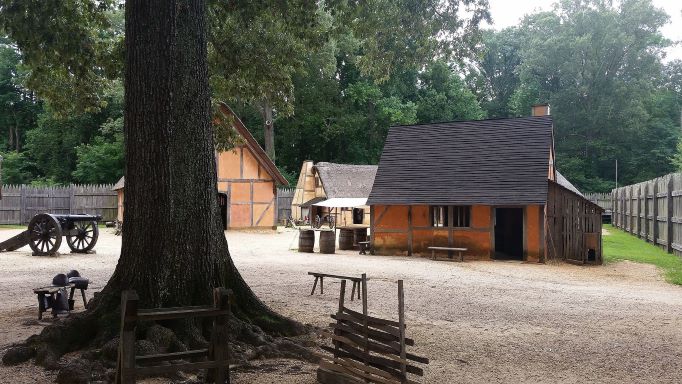
By Pi3.124 - Own work, CC BY-SA 4.0
Sources:
Jamestown Settlement. https://jyfmuseums.org/jamestown-settlement/
McDermott, Annette. “What Was Life Like in Jamestown.” History.com. 25 July 2018. https://www.history.com/news/jamestown-colony-daily-life
Join Sherry's
Writing Journey
Previous Posts
The Bible Controversy of King James
Tamera Kraft
12/26/2022
Two Husbands for Pocahontas
Sherry Shindelar
8/5/2022
Indian Princess and the Soldier: Love Story or Myth
Sherry Shindelar
7/15/2022
Jamestown: New Hope or Death Trap?
Sherry Shindelar
6/24/2022